Vacant Cost Recovery Fee: How to Handle Resident Utility Theft
Learn how to track and stop resident utility theft at your multifamily properties, while boosting your bottom line by assessing a vacant unit cost recovery fee.
Utility transfer violations represent one of the most overlooked profit drains in multifamily operations today. When residents fail to transfer utilities into their name within required timeframes, your company inadvertently absorbs costs that rightfully belong to the renter. This is sometimes referred to as resident utility theft, or vacant unit cost recovery.
Whether you manually track utility transfer violations or leverage utility software that automates this process, staying vigilant is well worth the effort—because as industry data shows, many renters aren’t making transfers when they should, generating substantial costs that become your company’s responsibility.
Why do multifamily companies charge a vacant cost recovery fee?
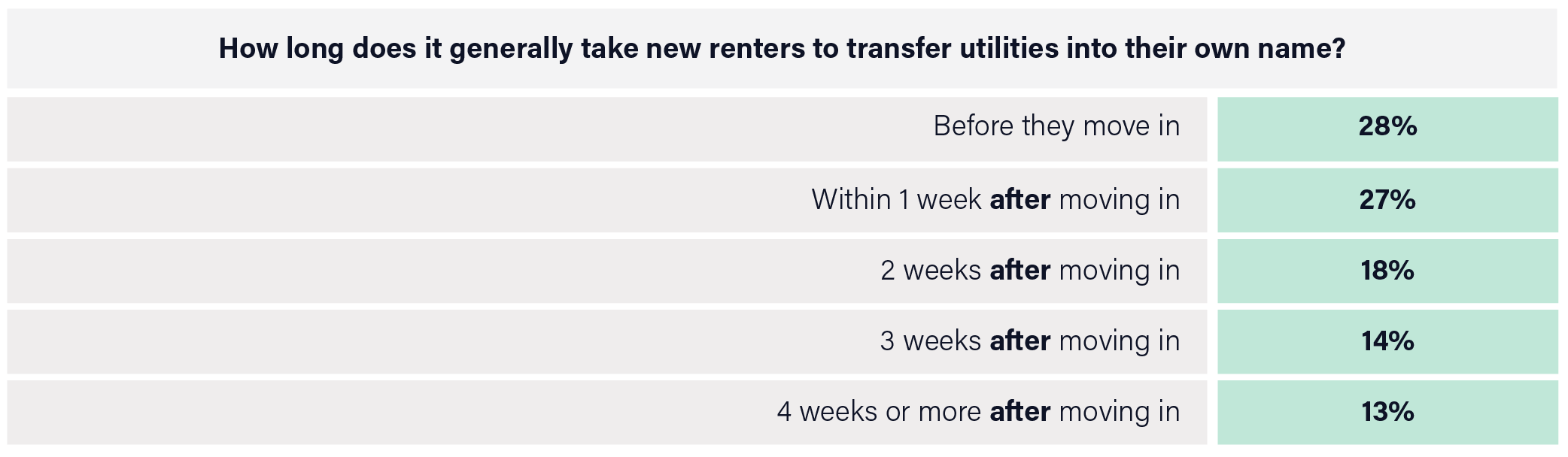
According to Zego’s Multifamily Revenue Operations Report, a comprehensive survey of 600 property managers about how they handle critical operational processes, 45% of residents take two weeks or more to transfer utilities into their name after moving in. While 55% transfer in a timely manner (with 28% completing the process before their move-in date), nearly half of all renters are leaving property managers to cover utility expenses that aren’t theirs to pay.
It could be that these instances happen because moving is chaotic and renters simply forget. Or not transferring utilities could be intentional. No matter the reason, your property management company is stiffed with utility charges that belong to the resident.
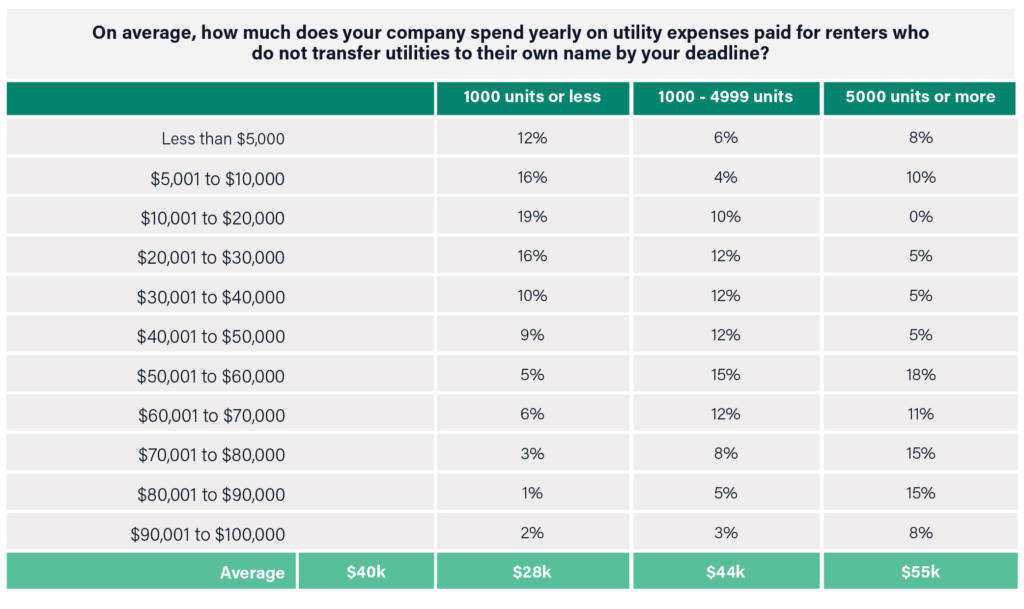
The financial impact is significant. Survey respondents who track these expenses report that, on average, companies spend $40,000 annually on utility expenses that belong to their residents. As expected, costs increase with portfolio size—but regardless of how many units you manage, that’s money that should be staying on your books, not subsidizing resident negligence.
How soon can I charge renters a vacant cost recovery fee?
Companies should assess a vacant cost recovery fee as soon as the deadline has passed for their renter to move utilities into their name. However, if you are not monitoring utility transfer deadlines, it can take quite a long time before your teams discover a violation.
Zego’s Multifamily Revenue Operations Report revealed a troubling trend: the majority of operators say it takes nearly a month to discover a utility transfer violation, with some reporting even longer timelines.
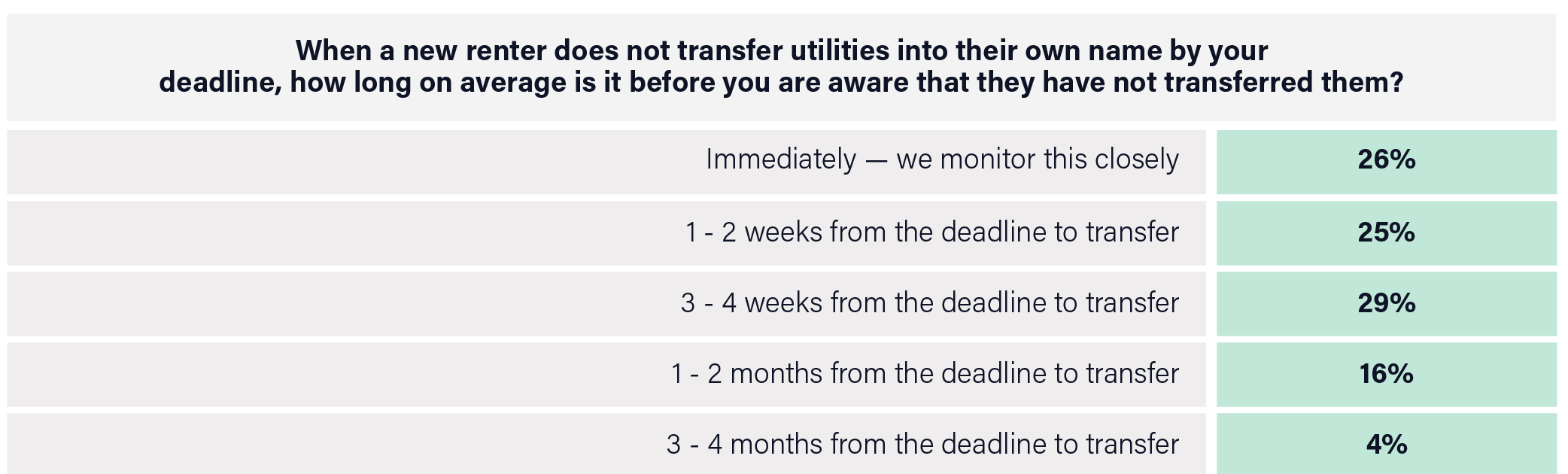
Only about a quarter of companies say they closely monitor utility transfer violations—a critical practice for minimizing unnecessary costs. The longer a violation goes undetected, the more utility expenses your company absorbs and the harder it becomes to recover those costs.
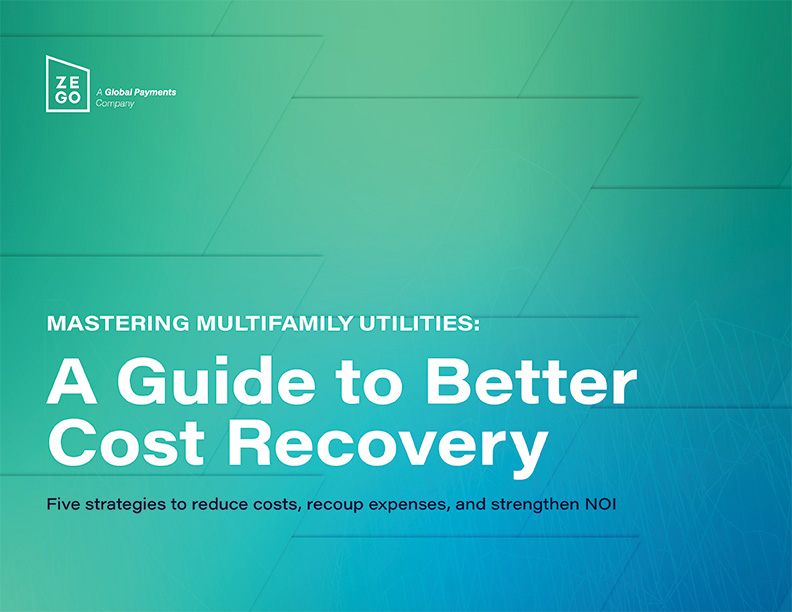
FREE GUIDE
Mastering Multifamily Utilities: A Guide to Better Cost Recovery
One of the most valuable lessons in property management is to understand that increasing revenue sources, like rent, is not always the best solution to boost profitability. In this ebook, learn how to plug the five significant expense leaks in your utility management operations with actionable solutions.
Most operators charge a vacant cost recovery fee for utility theft—but that’s not enough
When a utility transfer violation is discovered, apartment operators must determine the precise amount the renter owes in back utility expenses. To compensate for these expenses and the administrative effort required to recoup them, operators have the option to assess a vacant cost recovery fee.
74% of apartment operators reported that their company charges residents a penalty fee for utility transfer violations:
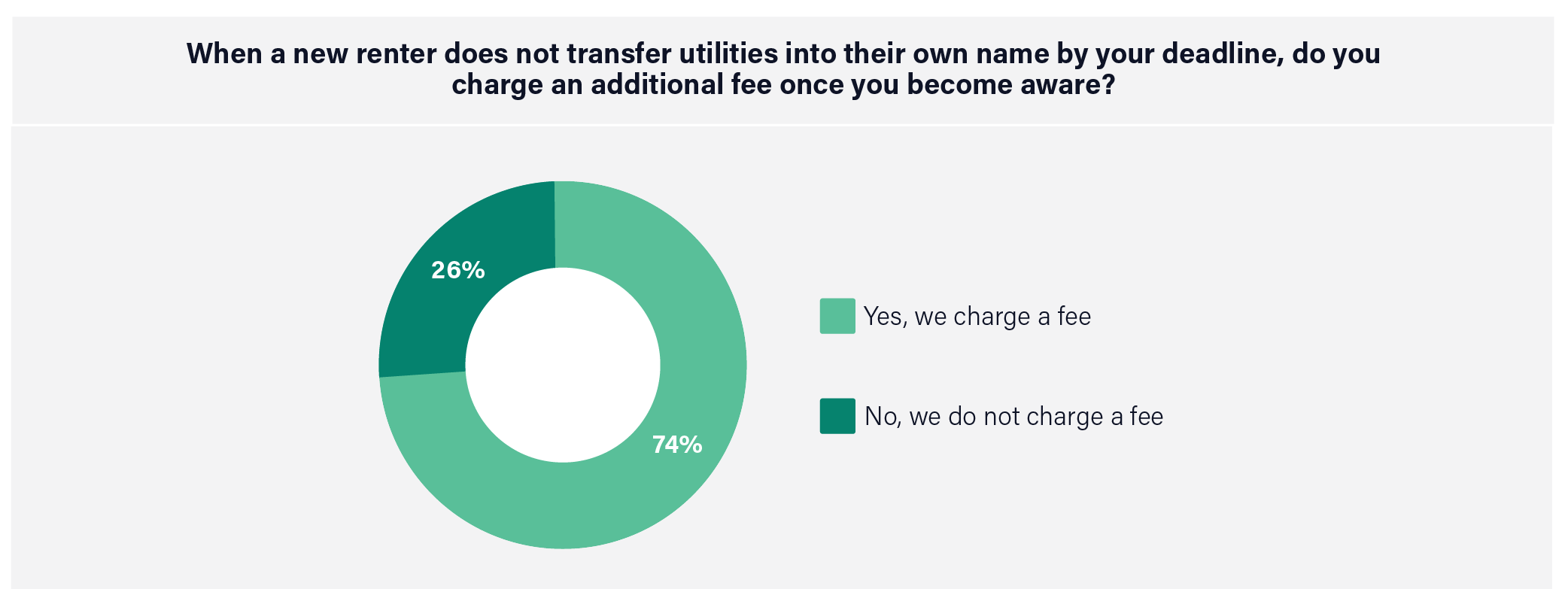
While this is an encouraging statistic, implementing a vacant cost recovery fee can create a false sense of security. Penalty fees help offset costs and incentivize compliance. But they rarely cover the full financial impact of delayed detection. The real profit protection comes from catching violations quickly, not just penalizing them after the fact.
Properties that detect violations within 48-72 hours typically collect both the penalty fee AND full reimbursement for utility expenses. Those discovering violations weeks later often struggle to collect either, turning a manageable administrative issue into a significant financial loss.
Why should I use a vacant unit cost recovery service?
Vacant unit cost recovery is the process of examining move-in and out dates of each resident and comparing them with the property’s utility bills. If there is an overlap between the residents’ move-in date and the utility bills the property manager has received, it’s an indication of utility theft.
Some property management companies manually perform vacant cost recovery in-house. That’s why an automated vacant cost recovery service is the most cost effective and efficient way to accomplish this task.
A vacant unit cost recovery service pinpoints the number of violations by your residents at each property, quickly identifying where adjustments need to be made. The sooner you are alerted to a potential problem, the higher the likelihood it can be resolved while its effects are minimal.
Even better, some providers will automatically bill back the charges to residents so property managers can recoup their money. And, if local regulations permit, you can elect to automatically assess a fee to offending residents, creating a new revenue stream.
With a vacant unit cost recovery service, you can:
- Quickly identify vacant cost theft: Identify and bill residents who have not put utilities in their name
- Recover utility costs and penalties: Recover “vacant unit” utilities expenses and associated penalties
- Customize penalty periods and fees: Customize grace periods, billing parameters (by unit, utility type, etc.) and assess a vacant recovery fee for repeat offenders
How to charge a vacant cost recovery fee
When it comes to recouping the utility charges from residents, timing is everything. The sooner you are notified about potential utility theft, the sooner you can make efforts to recoup that money and protect your bottom line.
A best-in-class utility platform catches those occupied apartments that do not switch over the utilities and will make sure the property does not cover the costs of their utility consumption. Instead, they add those charges to the resident’s statement and, if applicable, charge a vacant recovery fee.
To help property managers stay ahead of the game, Zego’s vacant cost recovery platform offers same-day notifications. Our Vacant Unit Cost Recovery team notifies property managers about delinquent utility account transfers within a day of each utility’s new billing cycle.
With expedited notifications, property managers can minimize instances (and the financial impacts) of utility theft. Those who also use Zego’s resident utility billing services can then automatically bill any offenders for what they owe, plus any vacant recovery fee they have decided to charge.
Vacant cost recovery services save multifamily companies money while reducing the administrative burdens for their employees. If your organization is struggling to stay on top of vacant cost recovery efforts, contact us to learn more.
Stop utility theft at your properties
When new residents fail to transfer utilities into their names, your bottom line takes a hit. Tracking this information is cumbersome, so you may be paying new residents’ utility bills for months. Chat with Zego and stop utility theft at your properties today.